
News
Creators – the new stars of the Croisette
26th June 2026
The marketing and creator industry gave AI a lukewarm welcome at last year’s Cannes Lions, nervous it was plotting to eat its creative lunch. In 2026, its attitude seems to have shifted, accepting AI for its critical infrastructure, if not its ideas.
Whether because of industry resistance to interference in the ‘craft’, growing public distrust/dislike of lab-grown content, simple economics or an acceptance that there are just some things AI can’t do as well (yet), the big labs seem to have changed tack with the industry.
Creativity, taste and judgement have been re-valued at a premium
Creativity, taste and judgement – underpinned by cultural relevance and human emotion – have been re-valued at a premium. But if brands, agencies and creators want to produce and reach audiences at scale, building AI-first workflows for insight, creative production, testing, distribution and measurement is the way to go.
Not so much eating your lunch, but suggesting recipes, helping make it, tasting it, serving it and writing the review.
Frankly, AI’s role and impact on more important matters – scientific discovery, human health, climate change – is far more consequential. If anything, AI is ‘over-hyped in the short-term and under-appreciated in the mid- to long-term’, as put by the AI industry’s most un-bro-like person of interest, Google DeepMind co-founder and CEO Demis Hassabis, in his packed-out fireside.
Live your best ‘pixel-imperfect’ life
Elsewhere on the Croisette, legacy brands were quick to jump on growing anti-AI consumer sentiment to champion all things low-fi and retro. Polaroid’s Creative Director Patricia Varella did a fantastic job of encouraging us all to live your best ‘pixel-imperfect, un-optimised’ life. Get bored, do your own work and stop rotting your brain, was the message.
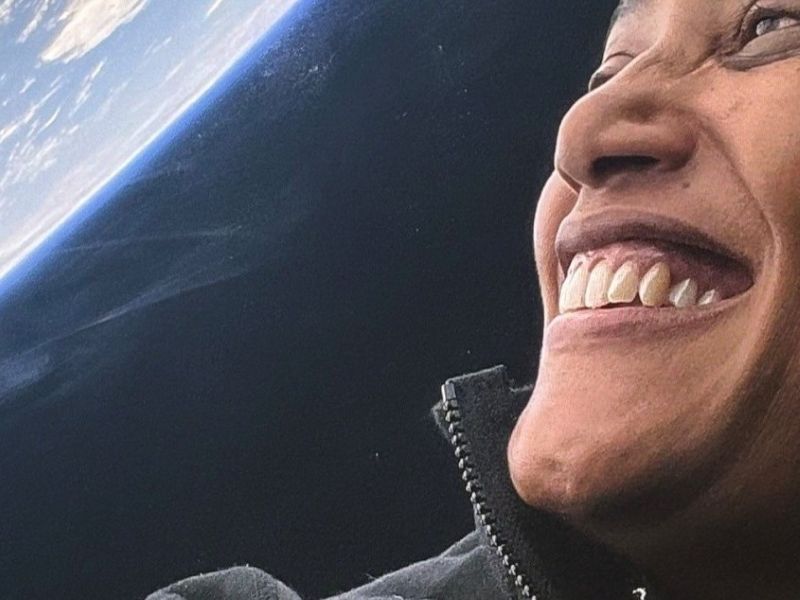
Professor Brian Cox still thinks space is amazing, and wants us all to promote the value of intergalactic exploration and be aware of its attendant issues – from satellite congestion/collision to space junk to equitable access. Joking aside, his 10-minute opener on the importance of Earth as possibly the only civilisation with any meaning, against a stunning data-enabled visualisation of the billions of galaxies that surround us, could only leave you feeling a little humbled, whatever VIP tickets you had for the evening. And Sian Proctor, Ph.D.‘s own personal space journey was an inspiring tale.
Surprising fact (to me at least): despite each one of the UN’s 17 sustainable development goals relying on space technologies like GPS, its Office for Outer Space – whose remit is the whole of the known and unknown universe – has a staff of 21 people, according to its director Aarti Holla-Maini.
Back on earth, there were plenty of bizarre ‘conversations’ clearly put on for star power rather than substance. Malcolm Gladwell ‘interviewing’ the DJ/producer/podcaster Questlove being a case in point.
The US media giants brought the celebrity stardust, with NBCUniversal wheeling out SNL’s Colin Jost, late night stalwart Seth Meyers, Real Housewives of Beverly Hills’ Rachel Zoe and Alan Cumming (of Traitors fame) for a meandering chat about fandom. Fun, but achingly obvious they were all either told, or paid, to turn up and hawk its output to ad agencies and CMOs.
The space for ‘useful civil disobedience’ and protest is shrinking
Patagonia’s VP of Creative Alex Weller scored a home run with his call for brand activism, as well as honest impact reporting. Position your ESG report deliberately and honestly as a ‘work in progress’, not a glossy brochure of ‘resolved tensions’, giving as much space to the shortfalls as the wins. The rationale for its publishing partnership with Greenpeace’s Annie Leonard provided the most arresting thought of the day – the space for ‘useful civil disobedience’ and protest is shrinking in countries across the world, and we need to create more of it.
Mel Robbins– self-help author, podcaster and mantra-maker extraordinaire – provided an uplifting message for all wannabe creators. Get over your ‘cringe’ and start, because you’re probably better than half the people making millions as influencers. And if you’re not sure where to start, start by clarifying what you want to say and make it for one person. If it’s good, word of mouth will take care of the rest (alongside AI-optimised production and platform distribution presumably).
Meredith Kopit Levien, president and chief executive officer of The New York Times Company, gave an impassioned talk on the importance of independent, institutional media houses in the face of all the ‘what Trump just said’ dross masquerading as news. Providing the world’s most informed and insightful writers with a platform to tell the honest truth however uncomfortable – with all the necessary security, legal resources, fact-checking teams and distribution channels – is a noble thing and we should all be worried if it doesn’t exist.
The creator economy is where it’s at
The big theme of Cannes 2026 however was screamingly obvious – from the dozens of branded ports, beach-front hotels, cabanas, rooftops and secret gardens to the flurry of deals and partnerships announced this week – the creator economy is where it’s at, and it’s being monetised like never before. The big social media and entertainment platforms have fully woken up to creators’ economic value as the new alternative viewing to traditional TV and film, and the AI labs are here to help.
Who knows, maybe one day we’ll see a creator take home a Palme D’Or as well as a Cannes Lion.
By Martin Currie, Chief Executive at Citypress
To discuss how AI and the creator economy will impact your communications strategy, get in touch with our specialist team.
More news
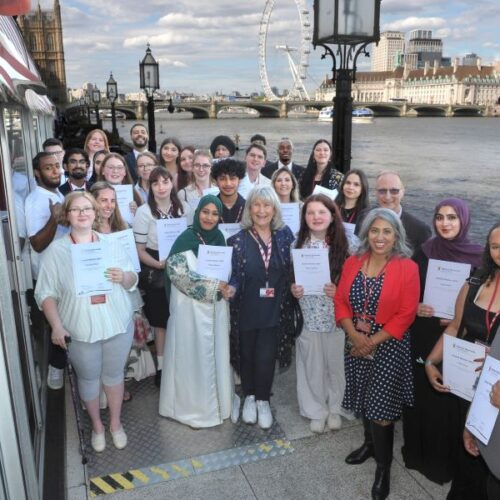
Citypress announces pro bono partnership with the Helena Kennedy Foundation
25th June 2026
Millennials and Gen Z are rewriting the money rulebook and financial services brands need to keep up
23rd June 2026
London Tech Week: public fear of AI presents a key opportunity for communications
12th June 2026